Process Flow Description for Chrome Plant

The flowchart outlines the key stages involved in the chrome processing plant, from raw material extraction to the final product. Here's a step-by-step breakdown of the process:
Raw Material Extraction: The process begins with the extraction of chrome ore from the mine. The ore is then transported to the processing plant.
Crushing and Grinding: The extracted chrome ore is crushed and ground into smaller particles to facilitate further processing.
Screening: The ground ore is screened to separate particles of different sizes. This ensures that only the appropriately sized particles move on to the next stage.

Gravity Separation: The screened ore undergoes gravity separation to concentrate the chrome content. This step typically involves the use of spirals or shaking tables to separate the heavier chrome particles from the lighter waste material.
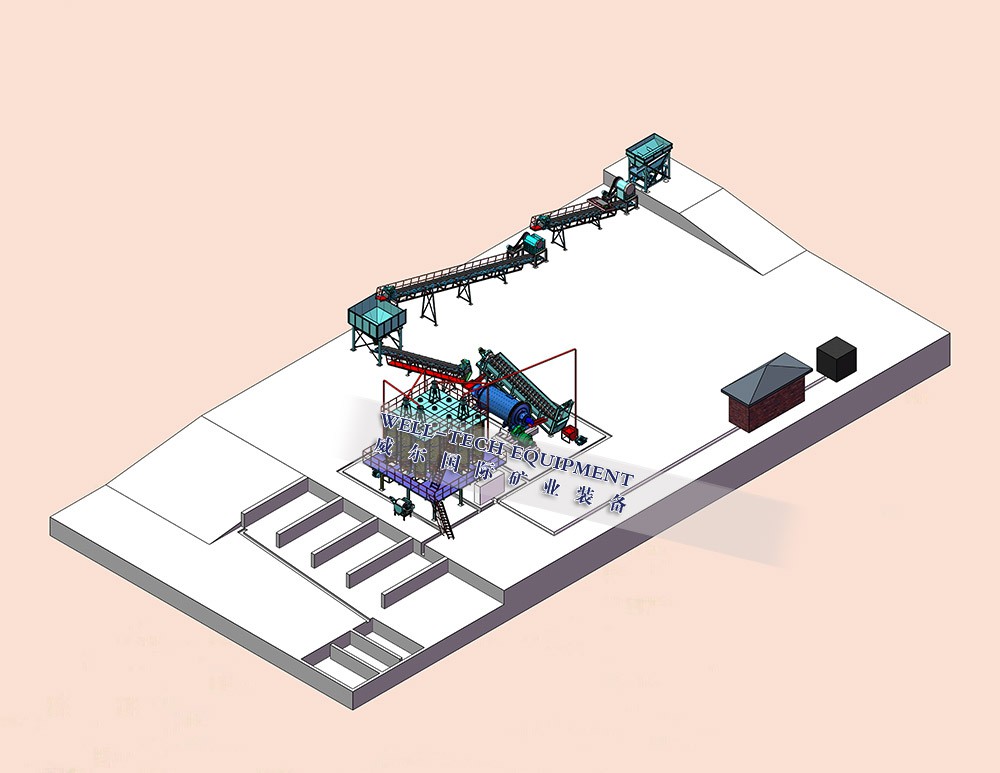
Magnetic Separation: The concentrated ore is then subjected to magnetic separation to remove any magnetic impurities, further refining the chrome concentrate.
Flotation: In some cases, flotation is used to separate chrome from other minerals. This involves adding reagents to the ore slurry to make the chrome particles hydrophobic, allowing them to attach to air bubbles and float to the surface for collection.
Dewatering: The final chrome concentrate is dewatered to remove excess moisture, resulting in a product that is ready for further processing or sale.
Final Product: The processed chrome concentrate is then packaged and transported for use in various industrial applications, such as stainless steel production, alloy manufacturing, and chemical processing.
Suitable Minerals for Selection
Given the nature of the chrome processing plant, the following minerals are suitable for selection:
Chromite (FeCr2O4): The primary ore of chromium, chromite is the main mineral processed in chrome plants. It is valued for its high chromium content and is essential for producing ferrochrome and stainless steel.
Magnetite (Fe3O4): Often found alongside chromite, magnetite can be separated using magnetic separation techniques. It is useful in various industrial applications, including as a source of iron.
Ilmenite (FeTiO3): While not a primary target in chrome plants, ilmenite can sometimes be found in chrome ore deposits. It is a source of titanium and can be processed separately.
This flowchart and the described process are crucial for efficiently extracting and refining chrome, ensuring high-quality output for industrial use.