


Distribution of major mineral resources and geological background analysis on the African continent
Introduction: Distribution of mineral resources in Africa, Division of mineralization zones in the African continent, List of ore dressing equipment and processes for Guinea placer gold mines. The African continent is one of the regions with the richest mineral resources in the world, with reserves of at least 17 of the world's 50 most important mineral resources ranking first in the world.
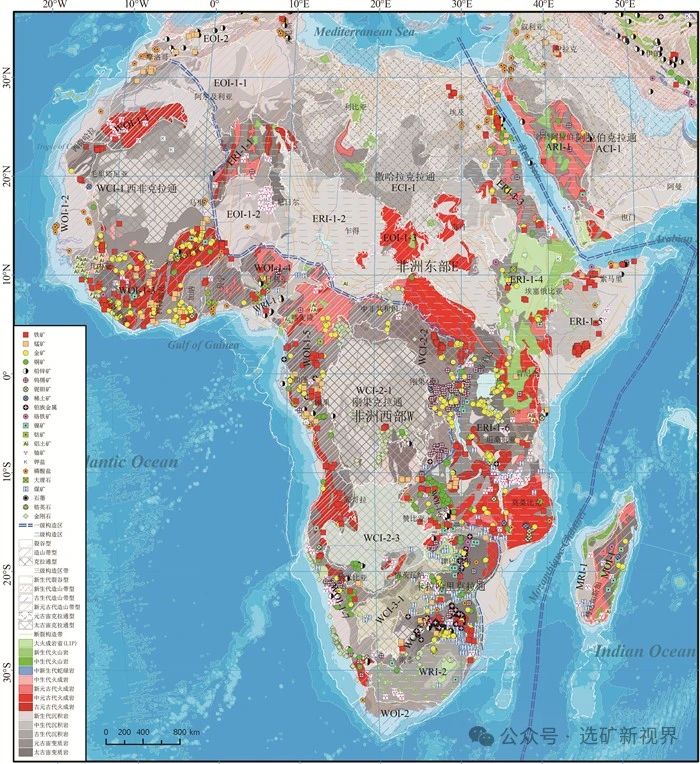
Geological map of new tectonic units and major mineral deposits on the African continent WC-Western Craton type; WO-Western Orogenic belt type; WR-Western Rift type; EC-Eastern Craton type; EO-Eastern Orogenic belt type; ER-Eastern Rift type.
These mineral resources are not only diverse in type, but also in huge reserves, especially strategic minerals such as platinum, manganese, chromium, gold, and diamonds, which occupy an important position in the world. This paper will start from the geological tectonic background of the African continent, combine mineralization and geological history, and systematically analyze the distribution characteristics and formation mechanism of the main mineral resources in Africa.
1. Geological tectonic background of the African continent The geological structure of the African continent is mainly composed of three types of lithosphere: craton type, orogenic belt type and rift type. Its formation and evolution process has a decisive influence on the distribution of mineral resources. Egypt Rock Gold Mine Project: A comprehensive analysis from crushing and grinding to selection Distribution of Tanzania's mineral resources
1.1 Distribution of craton lithosphere: Mainly distributed in western and southern Africa, including the West African Craton, the Congo Craton and the Kalahari Craton. Features: Formed in the Archean (2.5~3.8 Ga), dominated by crust-mantle differentiation and vertical crustal accretion. Mineralization: Mainly formed BIF-type iron ore, greenstone-type gold ore, and minerals such as chromium, nickel, and platinum group elements (PGE).
1.2 Distribution of orogenic lithosphere: Mainly distributed in eastern and northern Africa, including the East African orogenic belt and the Sahara Neoproterozoic orogenic belt. Features: Formed from the Paleoproterozoic to the Neoproterozoic, mainly due to horizontal crustal accretion and plate collision and amalgamation. Mineralization: Mainly formed gold, copper, chromium, platinum group, manganese, iron, nickel, vanadium, titanium, uranium and other metal deposits.
1.3 Distribution of rift-type lithosphere: Mainly distributed in eastern Africa, including the East African Rift Belt. Features: Formed in the Mesozoic and Cenozoic eras, with the opening of the Atlantic Ocean and the separation of the African and South American continents. Mineralization: Mainly forms primary diamond deposits, oil and gas fields, base metal deposits, and radioactive metal deposits.
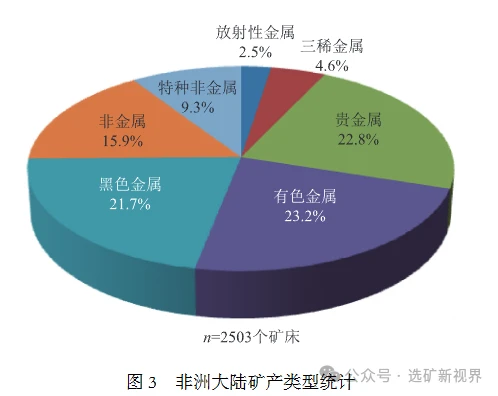
2. Distribution of major mineral resources in Africa 2.1 Precious metals and strategic minerals.
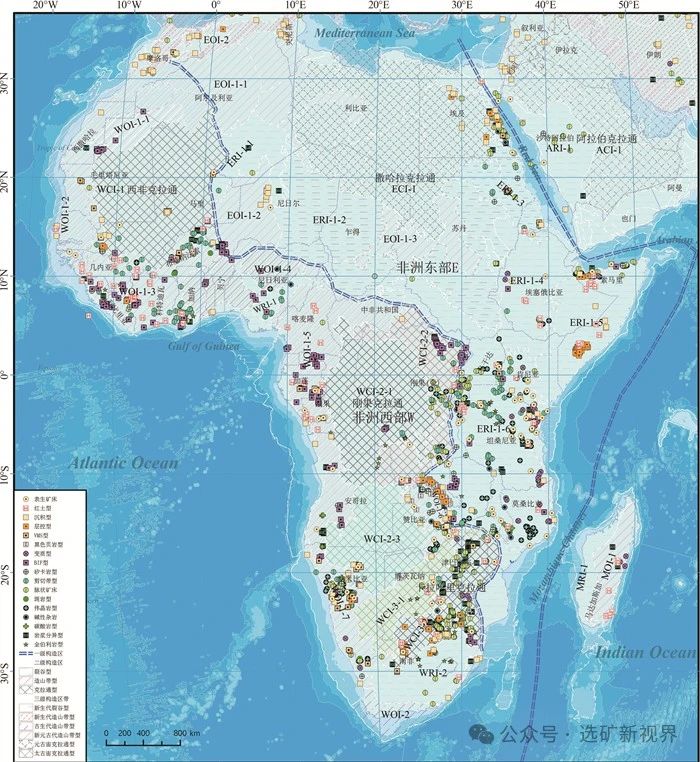
Platinum group elements (PGE): Mainly distributed in the Bushveld Complex in South Africa, accounting for more than 80% of the global reserves, and closely related to the basic-ultramafic rocks in the Archean cratonic lithosphere. Gold: South Africa, Ghana, Mali, Tanzania and other countries are the main production areas. The Witwatersrand Basin in South Africa is the world's largest gold field, mainly related to the Archean greenstone belt and the Neoproterozoic orogenic belt lithosphere. Diamonds: Mainly distributed in Botswana, South Africa, Angola and the Democratic Republic of the Congo, related to kimberlite in the cratonic lithosphere and placer deposits in the rift lithosphere.
2.2 Ferrous Metals and Alloy Minerals Manganese: South Africa and Gabon are the world's major manganese ore producers, related to Archean BIF-type iron ore deposits and Paleoproterozoic sedimentary manganese deposits. Chromium: South Africa and Zimbabwe are the main producing areas, related to layered basic-ultramafic rocks in the Archean cratonic lithosphere. Iron: Mainly distributed in South Africa, Guinea and Mauritania, related to Archean BIF-type iron ore deposits and Paleoproterozoic sedimentary iron ore deposits.
2.3 Nonferrous and rare metals Copper: Zambia and the Democratic Republic of the Congo are the main producing areas of the Central African Copperbelt, which are related to the sedimentary copper deposits in the Neoproterozoic orogenic lithosphere. Cobalt: The Democratic Republic of the Congo is the world's largest cobalt producer, which is related to the copper-cobalt deposits in the Central African Copperbelt. Uranium: Namibia and Niger are the main producing areas, which are related to the Paleozoic sedimentary uranium deposits and the uranium deposits in the Mesozoic and Cenozoic rift lithosphere.
2.4 Non-metallic minerals Phosphate: Morocco and Western Sahara are the world's largest phosphate producing areas, related to Paleozoic marine sedimentary phosphate deposits. Graphite: Mozambique and Tanzania are the main producing areas, related to metamorphic graphite deposits in the Archean cratonic lithosphere.
3. Geological evolution and mineralization of African mineral resources The formation of mineral resources in Africa is closely related to its complex geological evolution history. In the Archean Eon, the craton-type lithosphere was dominant, forming BIF-type iron ore, greenstone-type gold ore, and chromium, nickel, and platinum group element deposits; from the Paleoproterozoic to the Neoproterozoic, the orogenic lithosphere was dominant, forming gold, copper, chromium, manganese, iron, nickel, vanadium, titanium, uranium and other deposits; in the Mesozoic and Cenozoic, the rift-type lithosphere was dominant, forming diamond, oil and gas fields, base metals and radioactive metal deposits.
4. Conclusion The distribution of mineral resources in Africa is closely related to its geological tectonic background and evolutionary history. The craton type, orogenic belt type and rift type lithosphere control the formation and distribution of different types of minerals. Africa's mineral resources are not only rich in variety, but also huge in reserves, occupying an important position in the global resource supply. In the future, with the advancement of geological exploration technology and the deepening of mining development, the mineral resource potential of the African continent will be further released, providing important support for global economic development.


