


Here is a comprehensive overview of gold plant mining equipment, broken down by the stages of the mining and processing cycle.
The Gold Processing Cycle: From Ore to Bullion
A gold processing plant is designed to extract gold from its ore and refine it to a high-purity product (dore bars or directly to bullion). The equipment used depends heavily on the type of deposit (hard rock vs. alluvial/placer) and the grade of the ore.
1. Primary Crushing and Stockpiling
This is the first step for hard rock (lode) deposits. The goal is to reduce the size of large rocks from the mine to a manageable size for further processing.
Jaw Crusher: The workhorse of primary crushing. It uses immense pressure to break large rocks (up to 1-1.5 meters in diameter) down to ~150-250mm.
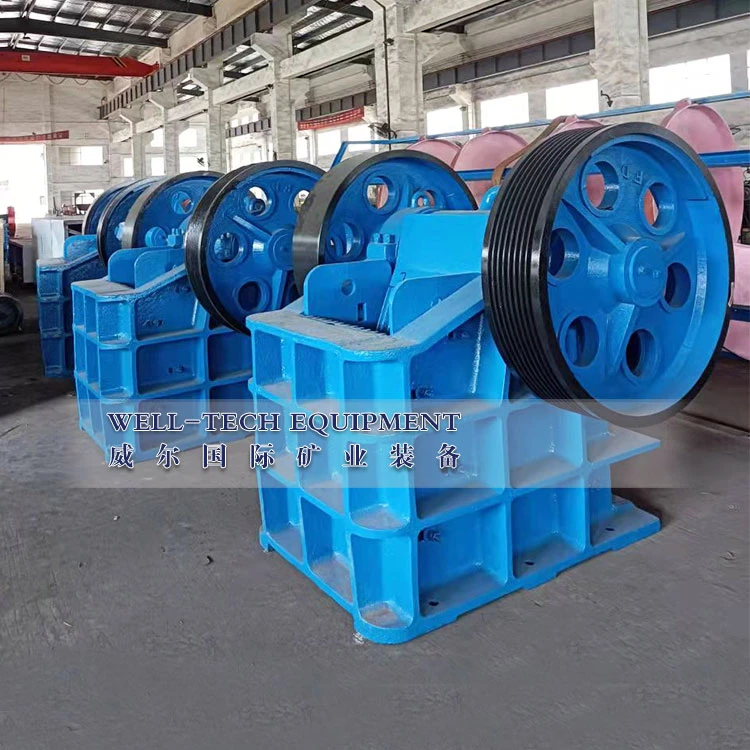
Jaw Crusher
Gyratory Crusher: Used for very high-capacity plants. It's more expensive but can handle larger feed sizes and greater volumes than a jaw crusher.
Conveyors: Belt systems that transport crushed material between stages and to stockpiles.
Feed Hopper & Apron Feeder: Regulates the flow of ore from the stockpile into the crusher.
2. Milling & Grinding (Comminution)
The goal here is to liberate the gold particles from the surrounding rock by reducing the ore to a fine sand or powder.
SAG Mill (Semi-Autogenous Grinding): A large rotating cylinder where the ore itself is the primary grinding medium. Larger rocks impact and break smaller rocks.
Ball Mill: Follows a SAG mill (or is used independently). It uses steel balls inside a rotating cylinder to grind the ore into a fine powder. This is often where the ore is mixed with water to create a slurry.
Cyclones: Used in a closed circuit with the ball mill. They classify the ground slurry, sending coarse particles back to the mill for further grinding and allowing fine particles to proceed to the next stage.
3. Gravity Concentration
This stage recovers free, coarse gold that has been liberated by grinding. It's highly efficient and cost-effective, as it avoids the need for chemicals on this portion of the gold.
Centrifugal Concentrators (e.g., Knelson, Falcon Concentrators): The most common and efficient gravity equipment. They use a spinning bowl and centrifugal force to separate high-density gold from lighter waste minerals.
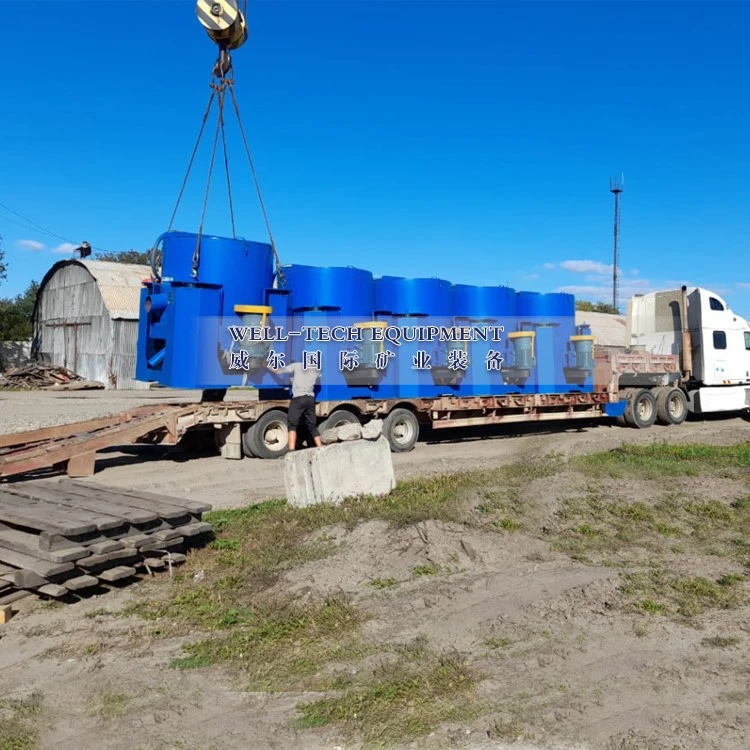
Gold Centrifugal Concentrator
Shaking Tables: A slightly inclined table with riffles that vibrates back and forth. Water and feed slurry flow across it; dense gold particles get trapped in the riffles while lighter material is washed away.

Shaking Table
Jig Machine: Use pulsating water to stratify material by density, concentrating heavier gold at the bottom.

Jig Machine
Spiral Classifiers: Separate particles based on size and density in a flowing stream.
4. Leaching & Gold Recovery
This is the core chemical process for recovering fine gold that gravity couldn't capture.
A. Leaching
The ground ore slurry is mixed with a dilute cyanide solution (or other less common lixiviants) which dissolves the gold.
Leach Tanks (Pachucas): Large, tall tanks with air agitation that hold the ore/cyanide slurry for 24+ hours to allow the gold to dissolve.
B. Gold Recovery from Solution
Once the gold is in solution, it needs to be extracted.
Carbon-in-Pulp (CIP) / Carbon-in-Leach (CIL) Tanks: A series of agitated tanks filled with activated carbon. The carbon granules have a high affinity for the gold complex and adsorb it from the solution, "stripping" the gold from the slurry.
Carbon Columns: Used in a "Carbon-in-Column" (CIC) circuit for heap leach operations, where the solution is passed through columns packed with carbon.
C. Elution & Electrowinning
This process strips the gold from the loaded carbon and turns it back into a solid metal.
Elution Column: The gold-loaded carbon is placed here. A hot, caustic solution (the eluant) is pumped through, desorbing the gold from the carbon.
Electrowinning Cell: The gold-rich eluant is pumped into these cells, which contain steel wool cathodes. An electrical current is passed through the solution, causing the gold to plate onto the steel wool.
Smelting Furnace: The steel wool cathodes, now coated with gold, are mixed with fluxes (e.g., borax, silica) and melted in a furnace at high temperatures (~1200°C). This process separates the pure gold from impurities, which form a slag layer. The molten gold is then poured into molds to form dore bars (typically 80-90% pure gold, with silver being the main other metal).
5. Water Management & Tailings Disposal
This is a critical part of any modern mining operation for environmental and operational safety.
Thickeners: Large, circular tanks that use gravity to settle solid particles out of the process water, clarifying the water for recycling and de-watering the tailings (waste stream).
Tailings Dam / Storage Facility (TSF): A massive, engineered impoundment where the final, dewatered waste (tailings) is stored permanently.
Water Pumps & Piping: A complex network to move water and slurry throughout the entire plant.
Specialized Equipment for Alluvial / Placer Mining
For gold found in riverbeds and sand (placer deposits), the process is much simpler and primarily relies on gravity.
Trommel Screen / Scrubber: A rotating cylindrical screen that washes and classifies the raw material, removing large rocks and breaking up clay.
Sluice Box: A long, slightly inclined channel with riffles on the bottom. As water and gravel flow down it, heavy gold gets trapped in the riffles.
Gold Pan: The most basic and iconic tool for prospecting and small-scale work.
Dredge: A floating barge that excavates material from the bottom of a river or pond and processes it through an onboard plant (often with a trommel and sluices).

Scrubber Trommel
Summary Table: Equipment by Stage
| Processing Stage | Primary Function | Key Equipment |
|---|---|---|
| Primary Crushing | Reduce large rocks to manageable size | Jaw Crusher, Gyratory Crusher, Conveyors, |
| Milling & Grinding | Liberate gold by turning ore to powder | SAG Mill, Ball Mill, Cyclones |
| Gravity Concentration | Recover coarse, free gold | Gold Centrifugal Concentrator, Shaking Table, Jig Machine,Vibrating sluie box,gold sluice box. |
| Leaching | Dissolve fine gold using chemicals | Leach Tanks (CIL/CIP) |
| Gold Recovery | Extract gold from solution & refine it | Carbon Adsorption, Elution Column, Electrowinning Cell, Smelting Furnace |
| Tailings & Water | Manage waste and recycle water | Thickener, Tailings Dam, Pumps |
| Alluvial Mining | Process sand and gravel from rivers | Trommel screen, scrubber trommel,Sluice Box, Dredge |
This equipment, when configured correctly in a flowsheet, forms a complete gold processing plant capable of efficiently and profitably recovering gold from its ore.


