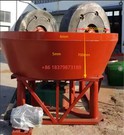
A drum scrubber (also called rotary scrubber or trommel scrubber) is a heavy-duty, horizontal rotating cylinder machine used in mining and aggregate processing to wash, scrub, and separate clay, mud, and soft oxides from raw ores, gravel, and alluvial materials.

Working Principle
The drum, inclined at 3°–6°, rotates slowly (25–40% of critical speed).
Raw material enters one end; internal lifters lift and drop rocks/pebbles, creating autogenous scrubbing (self-grinding) with water sprays.
Friction breaks down clay lumps, liberating target minerals (gold, diamond, tin, chrome) from sticky soil.
Slurry and washed oversize discharge to a trommel screen for sizing; undersize proceeds to concentration, oversize is discarded.

Key Structure
Rotating drum: Main body with wear-resistant rubber/polyurethane liners.
Drive system: Motor, reducer, and gears for low-speed rotation.
Support rollers: Four trunnions to hold the drum.
Internal lifters/scrapers: Enhance material tumbling and scrubbing.
Discharge trommel: Integral screen for grading washed material.

Main Applications
Mineral washing: Gold, diamond, tin, chrome, manganese, iron ore, tantalum-niobium.
Aggregate processing: Washing gravel, sand, and crushed stone with clay binder.
Clay removal: Desliming high-viscosity ores to prevent equipment clogging.
Alluvial mining: Liberating heavy minerals from riverbed sediments.
Core Advantages
High capacity: 1–400 TPH, handling feed sizes up to 200 mm.
Autogenous operation: Uses material's own rocks as grinding media, reducing wear parts.
Multi-function: Combines scrubbing, washing, and screening in one unit.
Low maintenance: Simple structure with durable liners, easy to operate.