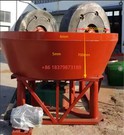
Whether gravity separation is suitable for recovering high-grade copper oxide ore depends on the specific characteristics of the ore.

Generally, gravity separation is more effective for ores where the target mineral has a significant density difference from the gangue (waste rock). However, for high-grade copper oxide ores, gravity separation is often not the most suitable method due to the following reasons:
Density Similarity: Copper oxide minerals (such as malachite, azurite, or chrysocolla) often have densities that are not significantly different from the surrounding gangue minerals, making gravity separation less effective.
Fine Particle Size: Copper oxide ores often require fine grinding to liberate the copper minerals, resulting in particles that are too fine for efficient gravity separation.

Leaching Preference: High-grade copper oxide ores are typically processed using hydrometallurgical methods, such as acid leaching, followed by solvent extraction and electrowinning. These methods are more efficient for extracting copper from oxide ores compared to gravity separation.

Low Recovery Rates: Gravity separation may result in lower copper recovery rates for oxide ores, as it is less effective at capturing finely disseminated copper minerals.
When Gravity Separation Might Be Considered:
If the ore contains coarse-grained copper oxide minerals with a significant density difference from the gangue, gravity separation could be used as a pre-concentration step.
In cases where the ore also contains sulfide minerals, gravity separation might be used to separate sulfide minerals from oxide minerals before further processing.
Conclusion:
For high-grade copper oxide ores, gravity separation is generally not the preferred method. Instead, hydrometallurgical processes like leaching, solvent extraction, and electrowinning are more suitable and efficient for recovering copper from such ores. Gravity separation may only be considered in specific cases where the ore characteristics favor its use.
In summary, gravity separation is not typically suitable for recovering high-grade copper oxide ores due to the limitations mentioned above.