Composition and dressing technology of tungsten ore in western Mongolia
1. Ore Properties Analysis: The deposit is primarily composed of wolframite (Fe,Mn)WO₄, followed by scheelite (CaWO₄). Associated metallic minerals include pyrrhotite, chalcopyrite, pyrite, molybdenite, bismuthinite, and sphalerite. Non-metallic minerals primarily include quartz, plagioclase, mica, and fluorite. Wolframite is typically distributed in nested, agglomerated, or disseminated patterns, with coarse crystals (0.5-5 cm), while scheelite is agglomerated or granular (0.1-1.2 mm). The mineral assemblage exhibits horizontal and vertical zoning: horizontally, wolframite + pyrrhotite + chalcopyrite dominates in the southern part, while scheelite + sphalerite dominates in the northern part. Vertically, scheelite + wolframite + chalcopyrite dominates in the shallower part, while scheelite + molybdenite + bismuthinite + sphalerite dominates in the deeper part.
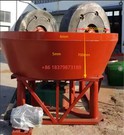
2. Ore dressing process design Based on the characteristics of the ore, the process of "stage grinding-classification and sorting-combined recovery" is adopted, focusing on the recovery of wolframite, scheelite and associated valuable metals. (1) Crushing and pre-selection Coarse crushing: Use a jaw crusher to crush the raw ore to ≤150 mm. Medium and fine crushing: Cone crusher + high-pressure roller mill, crushing to ≤20 mm. Pre-selection: Use photoelectric sorting or heavy medium sorting to discard some waste rock (quartz, feldspar, etc.) in advance to improve the selected grade. (2) Grinding and classification Stage grinding: Use rod mill + ball mill two-stage closed-circuit grinding to control the dissociation degree of wolframite monomer (-0.3 mm accounts for more than 80%) and avoid over-grinding. Classification: Spiral classifier + hydrocyclone to ensure that the particle size is suitable for subsequent sorting.

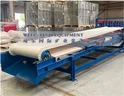
Gravity Separator Shaking Tables
3) Wolframite recovery (gravity separation + magnetic separation) Gravity separation: Use jigs + shakers to recover coarse wolframite (>0.5 mm), and fine particles (-0.5 mm) are enriched using spiral chutes + centrifugal concentrators. Magnetic separation: The gravity separation concentrate is subjected to weak magnetic separation (to remove pyrrhotite) and strong magnetic separation (to separate wolframite and scheelite).
(4) Scheelite flotation Pre-flotation treatment: The gravity separation tailings are finely ground (-0.074 mm, accounting for 90%), and the pH is adjusted to 9-10 using Na₂CO₃. Water glass is added to inhibit silicate minerals. Collectors: Fatty acids (such as oleic acid) or chelating collectors are used to float scheelite. Phosphates are added in the concentration stage to improve selectivity.

Flotatition Machine
5) Comprehensive recovery of associated metals from sulfide ore flotation: Flotation tailings are subjected to mixed flotation of copper, molybdenum, and bismuth (xanthate collector + frother), followed by copper suppression and molybdenum/bismuth separation. Zinc recovery: Sphalerite in the tailings is subjected to activated flotation (CuSO₄ activation + xanthate capture). (6) Tailings treatment: Dry stacking or backfilling: Tailings are dehydrated and then dry-discharged to reduce environmental pollution. Fluorite recovery: If the fluorite content is high, a flotation process can be added (acidified water glass to suppress gangue, oleic acid capture).

3. Key process optimization: Wolframite protection: Avoid over-crushing and utilize multi-stage gravity separation to improve recovery. Mineral zoning differences: Adjust grinding fineness and reagent system for northern and southern ore zones and deep and shallow ore. Environmental protection measures: Utilize wastewater recycling, and neutralize sulfide ore flotation wastewater.