


Typical deposit in West Africa - Kiaka gold mine in Burkina Faso.
The Kaka gold mine in Burkina Faso is an important world-class gold mine in the West African Craton, with proven and controlled resources of 110 tons and a grade of 1.09×10⁻⁶. It is currently owned by B2Gold of Canada (Fontaine et al., 2017).
Geological background and ore-bearing rocks The deposit is located in the greenstone belt in southern Burkina Faso. The ore-bearing rocks are a set of metamorphic volcanic sedimentary rock combinations, mainly composed of quartz-biotite metamorphic greywacke, metapelite, garnet-orthopyroxene schist and volcanic rocks. Structural ore-control characteristics The deposit shows obvious tectonic ore-control characteristics and has undergone four stages of tectonic deformation, namely: east-west compression, northwest-southeast compression, and subsequent two tectonic activations. Among them, the shear zone formed by the northwest-southeast compression developed amphibolite facies metamorphism, and the two tectonic activations were accompanied by greenschist facies retrograde metamorphism. These intersecting shear zones control the location and morphology of the ore bodies. Ore body distribution and morphology There are four main ore bodies, which are mainly located in the northeast-southwest shear zone and are distributed nearly parallel (Figure).
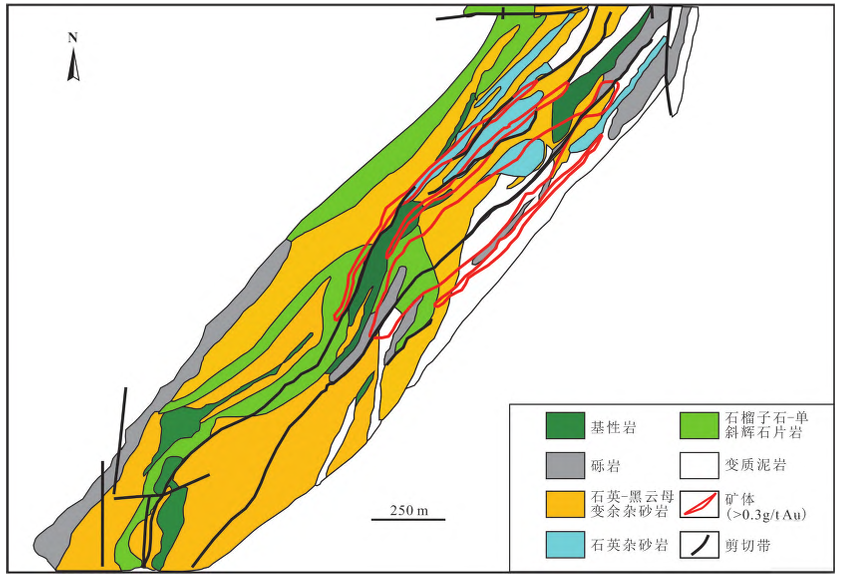
Regional geological map of Kaka gold mine in Burkina Faso
Types of gold mineralization Petrological studies have revealed two types of gold mineralization: Disseminated gold mineralization is related to NW-SE compression. Sulfides are relatively abundant, and gold-bearing minerals include pyrrhotite ± pyrite and chalcopyrite (gold grade 1×10⁻⁶~3×10⁻⁶). The gold formed accounts for about 80% of the total gold resources of the deposit. Vein gold mineralization is related to the reactivation of gold-bearing shear zones. Sulfides are relatively scarce, and diopside-actinolite veins and quartz-calcite veins are developed. Ore minerals include pyrrhotite + arsenopyrite ± silver-gold mines ± native gold and tellurium-bismuth mines (50×10⁻⁶~60×10⁻⁶).
It is generally believed that there were two gold mineralization events during the Ebonian orogeny in the West African Craton. The Re-Os age of pyrrhotite shows that the mineralization age of the deposit is 2157±24 Ma, which is consistent with the Ebonian orogeny in the West African Craton (~2150 Ma).

Alluvial gold plant in New Papua Guinea
At first use trommel screen for washing and screening.
Then to vibrating sluice box and carpet sluice box for separation heavy mineral.
At last concentrate to shaking table(shaker table) for concentration.
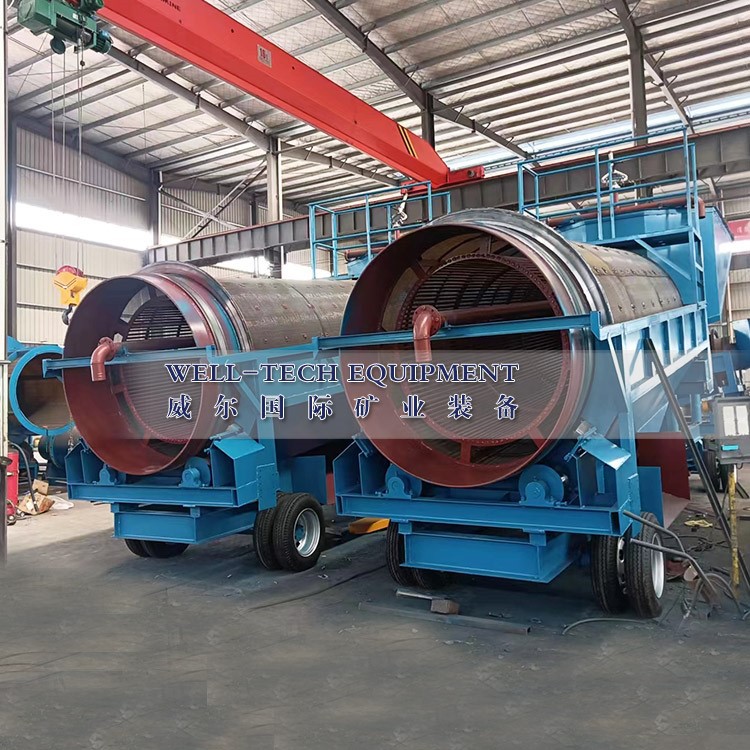
Trommel Screen
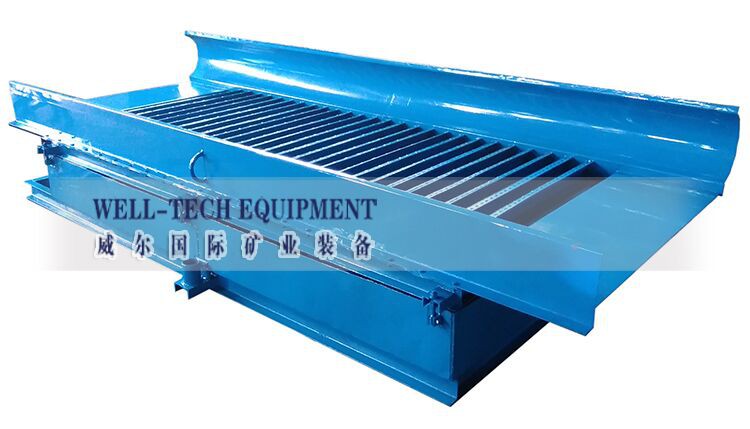
Vibrating Sluice Box

Shaking Table


